Richard Throckett Straker
'Salem's Lot: A NovelRichard Throckett Straker enters Jerusalem’s Lot as a figure of exacting control, commercial purpose, and barely concealed menace. He purchases the Marsten House and the long-defunct Village Washtub in a package deal, presents himself as the legal owner, and uses local intermediaries to prepare both properties for his partner, Kurt Barlow. His public identity is that of an imported antiques dealer seeking a modest retirement; his manner, secrecy, and association with the Marsten House make him one of the story’s earliest visible signs that the town’s ordinary routines are being reorganized by an alien and dangerous presence.
Identity and Introduction
Straker is first encountered through Lawrence Crockett’s unease. Crockett has sold him the Marsten House and Village Washtub more than a year earlier, calling the transaction the strangest deal of his career. When a car appears in the Marsten House driveway, Crockett connects it with the letter he has received from Straker and with the return of the property to active use. The seemingly minor detail of the car therefore turns a familiar landmark into a renewed source of anxiety.
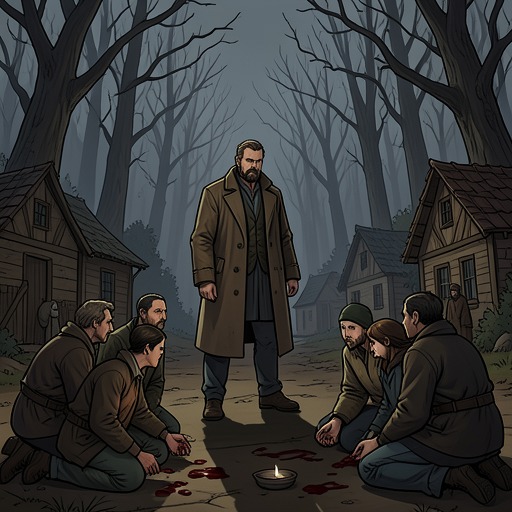
Straker’s physical presentation reinforces that effect. He arrives at Crockett’s office on a hot July afternoon wearing a sober three-piece suit. He is bald, sweatless, and marked by sharply defined features, dark eye sockets, and a slim black briefcase. He does not pause to examine the local property photographs, offer a handshake, or exchange a conventional greeting. Instead, he sits in the client’s chair and stares at Crockett with an unreadable expression. His hands are strikingly long, and later his handshake feels enormously strong and very dry. These details make him recognizable before his full purpose is known: he is a man whose self-command is so complete that ordinary social signals fail around him.
Acquisition and Commercial Plan
Straker identifies the residence he wants as the Marsten House and makes clear that the papers will stand in his own name. The adjoining commercial plan is equally deliberate. The former Village Washtub, a failed laundromat, is to become a business establishment located a block beyond the Municipal Building and facing the park. The pairing of the house and shop gives Straker a public economic identity while placing his private base in the town’s most charged and ominous residence.
He does not intend to carry out the renovations personally. Instead, he tells Crockett that his partner will perform the work and that Crockett will act as their agent. From time to time, Crockett must arrange for laborers to bring specified things to the house or shop, and he is explicitly instructed not to speak about these services. The arrangement converts ordinary real-estate brokerage and local labor into instruments of concealment. Straker’s authority depends not only on ownership but also on controlling what the townspeople may know about the properties’ preparation.
Partnership with Kurt Barlow
When Parkins Gillespie visits the newly prepared shop, Straker introduces his partner as Kurt Barlow. He says that the two men have worked together in London and Hamburg and describes the Jerusalem’s Lot establishment as their retirement. Their stated ambitions are modest: they claim to want no more than a living from old and fine things, while hoping to build a reputation in New England. The polished explanation gives the shop a respectable commercial purpose and presents the pair as experienced international dealers rather than newcomers with an unexplained interest in a notorious house.
Straker’s language is courteous, but his courtesy remains performative and controlled. He welcomes Parkins with a narrow smile, answers questions without surrendering useful information, and describes Barlow as someone who enjoys company. The public story of partnership thus works on two levels: it normalizes their arrival and simultaneously leaves Barlow just beyond direct scrutiny. Straker is the spokesman, agent, and visible manager; the division of roles makes him the operational face of a relationship whose deeper purpose is not yet available to the town.
Encounters with the Town
Straker’s interaction with Parkins shows how quickly he adapts his behavior to local observation. He accepts the constable’s informal visit, supplies the names and history that sound appropriate for a business introduction, and allows Parkins to leave with an impression of cultivated hospitality. Yet once Parkins has gone into the rain, Straker watches him through the shop window and is no longer smiling. The abrupt disappearance of the smile exposes the gap between his public mask and his private appraisal of the town’s scrutiny.
A later encounter with Dud Rogers gives Straker another controlled opportunity to inhabit his cover identity. When Dud asks whether he is the man who bought the Marsten place, Straker does not answer directly. Instead, he speaks of rats, owls, and wolves as predators of the night, displaying an interest in nocturnal creatures that sounds eccentric but carries a darker resonance. Dud’s report of millions of rats in the area provides the immediate subject, while Straker’s response turns a local nuisance into a vocabulary of predation. The conversation makes his fascination with the night part of his characterization without revealing the full nature of the threat he represents.
Narrative Role and Significance
Straker functions as the threshold figure between ordinary commerce and supernatural occupation. He buys recognizable local properties, employs familiar legal and labor arrangements, opens a shop, and speaks in the language of tasteful retirement. At the same time, he selects the Marsten House, requires unexplained deliveries, insists on silence, and maintains a gaze and physical presence that unsettle those who meet him. The contrast makes his menace cumulative rather than immediately declarative.
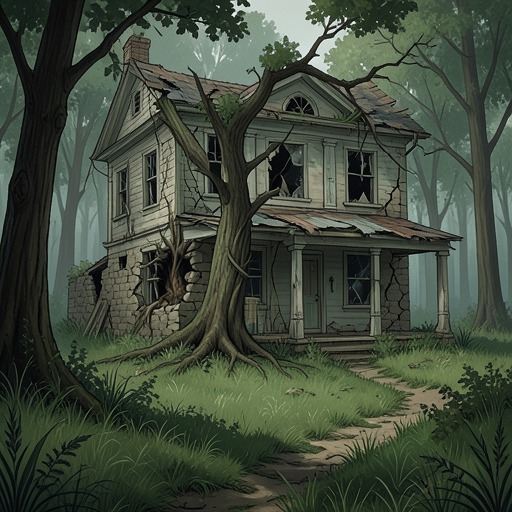
His importance also lies in the way he transforms space. The Marsten House is not merely a residence under new ownership; through Straker’s purchase, it becomes reoccupied and linked to the shop facing the town park. The commercial establishment offers a respectable front, while the house concentrates the older darkness already attached to the property. Straker’s actions therefore prepare the town for Kurt Barlow’s arrival and establish the practical infrastructure through which the coming danger can take hold. As an antagonist, he is less a spontaneous force than an organizer: he turns secrecy, property, labor, and social politeness into the machinery of invasion.